
The Science of a Successful Wedding Buffet: What Guests Actually Eat First
At Wah Punjabi, we have catered weddings across Bangalore and noticed one thing consistently — guests follow patterns. Certain counters always attract crowds first, some dishes disappear within minutes, and timing can completely change how people enjoy a meal.
Here is a closer look at the science behind a successful wedding buffet and what guests actually eat first.
Why Wedding Buffets Need More Than Just a Big Menu
Many people assume a larger menu automatically creates a better experience. In reality, too many dishes can confuse guests and slow down service.
A successful wedding buffet balances:
- Variety
- Crowd movement
- Food temperature
- Visual presentation
- Timing of service
The goal is to create an experience where guests enjoy the food without long waiting times or overcrowded counters.
The First Counter Guests Rush Towards
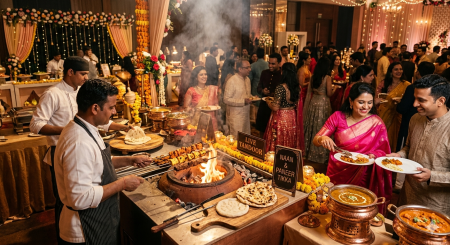
At most Bangalore weddings, the starter section becomes the first crowd magnet. But not all starters attract equal attention.
The counters that empty fastest are usually:
- Live tandoor stations
- Chaat counters
- Crispy snacks
- Interactive live cooking counters
Why does this happen?
Because guests are naturally drawn to:
- Freshly prepared food
- Smoke and aroma
- Visible cooking action
- Fast handheld items
The smell of freshly grilled paneer tikka or buttery kebabs instantly creates excitement and increases appetite.
This is why live counters often outperform static buffet trays.
Why Live Tandoor Counters Attract Bigger Crowds
There is actual psychology behind this.
Live cooking creates anticipation. Guests enjoy watching food being prepared in real time because it feels fresher and more premium.
At weddings, live tandoor counters also:
- Create visual energy
- Encourage social interaction
- Reduce boredom in buffet lines
- Improve perceived food quality
In Bangalore weddings especially, live Punjabi grills work exceptionally well during evening outdoor events and winter receptions.
Popular live counter favorites include:
- Paneer tikka
- Malai broccoli
- Tandoori mushrooms
- Butter naan stations
The aroma from the tandoor naturally pulls guests toward the counter even before they see the menu.
Timing Matters More Than Most People Think
One of the biggest catering mistakes is serving everything at the same time.
Guests usually eat in phases.
Phase 1: Exploration
Guests arrive and begin with snacks and drinks. During this stage, they prefer:
- Finger foods
- Light starters
- Crispy items
- Quick bites
Phase 2: Social Eating
Once conversations begin, guests revisit starter counters multiple times instead of immediately eating the main course.
Phase 3: Main Course Rush
The main buffet sees the biggest crowd roughly 60–90 minutes after the event starts.
This is why experienced caterers stagger refills and manage food timing carefully.
If the main course opens too early:
- Food gets cold
- Guests skip starters
- Buffets become overcrowded
Proper timing improves both food quality and guest satisfaction.
Vegetarian Consumption Patterns at Bangalore Weddings
Bangalore weddings often include highly mixed guest groups with different food preferences and cultural backgrounds.
From our experience, vegetarian dishes tend to have the widest reach because they appeal to almost every guest category.
What Guests Prefer Most Often
Live Vegetarian Counters Perform Extremely Well
Interactive stations like:
- Pasta bars
- Chaat counters
- Tandoor paneer stations
usually attract continuous crowds throughout the event.
Comfort Foods Always Win
Guests naturally gravitate toward rich, familiar dishes such as:
- Dal makhani
- Shahi paneer
- Veg biryani
- Naan and kulchas
These dishes work well because they balance indulgence with familiarity.
Freshness Matters More Than Variety
Guests often prefer fewer dishes that are constantly fresh over massive buffets with cold trays.
That is why live counters and regular buffet replenishment are critical for successful catering.
Why Guests Skip Certain Buffet Sections Completely
Some buffet items consistently receive less attention.
Usually these include:
- Heavy curries early in the event
- Duplicate dishes
- Items placed in poor locations
- Food requiring complicated plating
Guests prefer convenience at weddings. If something looks difficult to eat while socializing, many people skip it entirely.
Smart buffet design places:
- Fast-moving dishes in accessible areas
- Live counters near social zones
- Desserts away from crowded mains
Layout planning matters as much as menu planning.
The Most Important Part of Any Wedding Buffet
It is not the number of dishes.
It is flow.
A great wedding buffet feels effortless for guests:
- Short waiting times
- Fresh food
- Easy movement
- Balanced variety
- Engaging live stations
When buffet planning is done correctly, guests naturally move through the event without confusion or crowding.
That is what creates memorable dining experiences.
Final Thoughts
Every wedding crowd behaves differently, but guest psychology remains surprisingly consistent. People naturally move toward freshness, aroma, interaction, and convenience.
Understanding these patterns helps create wedding buffets that feel exciting instead of overwhelming.
At Wah Punjabi, we believe catering is not just about serving food. It is about designing an experience guests remember long after the wedding ends.
Whether it is a grand Punjabi wedding, a modern Bangalore reception, or an intimate family celebration, the right buffet strategy can completely transform the atmosphere of an event.